Category: #LC10

  • Standards for Excellence Licensed Consultant Program Celebrates “Ten Years of Advancing Excellence”

    Standards for Excellence Licensed Consultant Program Celebrates “Ten Years of Advancing Excellence”

    In May 2016, the Standards for Excellence Institute’s Licensed Nonprofit Consultant program celebrated its tenth anniversary and “Ten Years of Advancing Excellence.” The Standards for Excellence Institute promotes fundamental values in the nonprofit sector such as honesty, integrity, fairness, respect, trust, responsibility, and accountability, all of which are inherently important in the nonprofit world. 

    The Standards for Excellence Institute offers their Licensed Consultant training program to independent nonprofit consultants who apply and are accepted to participate in an exclusive professional development initiative. The training offers the knowledge, skills, and tools necessary to work with nonprofit organizations across the country interested in learning about the Standards for Excellence, implementing the code of excellence, and becoming accredited by the Standards for Excellence Institute. 

    The Institute has been celebrating this milestone with the #10YearsOfExcellence blog series, featuring a series of blog posts authored by Licensed Nonprofit Consultants and highlighting various standards outlined in the Standards for Excellence code. A reception was also held at this year’s Standards for Excellence Licensed Consultant training program featuring a video greeting from Shari Edelstein, the first instructor of the program. P.J. Chambers, a Licensed Consultant from the class of 2015 and owner of WebIXI, gave a presentation on utilizing online technology to promote a consulting business. 

    The Standards for Excellence has been formally adopted by eleven state, regional and national affiliate organizations, and is supported by over 100 Licensed Consultants and over 100 volunteers with professional experience in nonprofit governance and administration. The Standards for Excellence initiative helps nonprofit organizations achieve the highest benchmarks of ethics and accountability in nonprofit governance, management and operations. The program currently has over 200 individual nonprofit organizations that completed a rigorous application and review process to demonstrate adherence to the Institute’s published code of excellence. Licensed Consultants undergo an intensive, three-day training from the Standards for Excellence Institute in how to work with organizations seeking to implement the Standards for Excellence code. 

    The Standards for Excellence Institute will offer the next Licensed Consultant program in the fall of 2017.  For information on the Licensed Consultant program, visit standardsforexcellence.org/become-a-licensed-consultant

    The Institute, an operating division of Maryland Nonprofits, uses the Standards for Excellence program as its vehicle for effective change. The Standards for Excellence program works to help nonprofit organizations act ethically and accountably in their management and governance, while enhancing the public’s trust in the nonprofit sector.  To learn more, visit www.standardsforexcellence.org

  • The Board’s Mission (should they choose to accept it): Empower Their Nonprofit CEO

    The Board’s Mission (should they choose to accept it): Empower Their Nonprofit CEO

       nonprofit_consultant The following post Nonprofit CEO blog post was written by Standards for Excellence Licensed Consultant David Kubacki and is part of our “Ten Years of Advancing Excellence” blog series, celebrating ten years of the Standards for Excellence Licensed Consultant program. David, the principal of ViaDel Consulting Group, has provided organizational consulting services to several nonprofits with a focus on working with boards and committees on strategic planning and program assessment and improvement. Currently, he provides consulting services in partnership with the Delaware Alliance for Nonprofit Advancement (DANA), a Standards for Excellence Replication Partner. Mr. Kubacki currently serves as the President of the Wilmington West Rotary Club, as well as the Assistant Governor – Area 10 for Rotary District 7630. He is also the Vice President of the Board of the Delaware Symphony Orchestra. David Kubaki became a Standards for Excellence Licensed Consultant in 2015.  

    As a Standards for Excellence Licensed Consultant, I incorporate many aspects of the Code into all of my consulting engagements – from teambuilding to strategic planning. As a “recovering” nonprofit CEO, I often find that those engagements focus on the importance of the relationship between the nonprofit board and the CEO. This most important of relationships must focus on mutual trust and respect, and more concretely, clear goals, a board-driven strategic plan, and annual reviews.


    The Board Has One Employee

    The nonprofit CEO is the center of the organization – of course, as the leader that oversees day-to-day operations…but when the organization is operating effectively the CEO is the funnel that manages so much information that flows from the board and donors through to the staff and clients/service recipients – and vice versa. This is where things can get “iffy.” The nonprofit board “should appoint the chief executive, set the executive’s compensation, and annually evaluate the executive’s performance.” Once the board fulfills that duty, their relationship with the CEO should be one of trust – a trust that empowers him/her to run the organization. However, you often hear stories of boards who micromanage or send mixed messages about how much power the CEO is free to exercise. Sometimes semantics even gets in the way. It doesn’t matter if your “top dog” is called the CEO, President, Executive Director, Managing Director, or even Supreme Leader. What matters is that the board give the CEO the due authority and trust to run the organization. By no means does that mean that the board shouldn’t be involved with the staff or clients or even reviewing policies and offering opinions. However, when a board member (or the board as a whole) actively participates, they should do so with clear boundaries that empower the CEO to steer the ship in the right direction.

    A Musical Interlude: The “Maestro” Analogy

    I happen to be the Vice President of the Board of the Delaware Symphony Orchestra (DSO). I also happen to have contributed my consulting services to lead the board and other constituent groups through SWOT analyses that informed a board-driven strategic plan. Finally, the orchestra’s season-opening concert happens to have occurred just as I was writing this blog. They played Mahler’s 5th Symphony. The music was amazing. It was probably amazing when it premiered in 1902 and it’s still amazing today. Think of the symphony as the strategic plan. It was probably commissioned by one of the organizations by which he was employed – think of them, along with Mahler, as the board. Who is the nonprofit CEO in this analogy? It’s Maestro David Amado – the Music Director of the DSO (or, conductor, if you will). 114 years later it is his job to wield this “board-driven strategic plan” (created by Mahler and the commissioning body)– he’s looking at the score (the plan) and implementing it “note for note”. The Maestro, or nonprofit CEO, turns this plan into a melodic reality without forcing anyone to do anything. Waving his arms he inspires the orchestra (the nonprofit staff, volunteers, etc.) to act in perfect harmony to create an astonishing performance of Mahler’s 5th Symphony, the strategic plan. If only a board, a nonprofit CEO, and the organization as a whole could implement a strategic plan in such a way – inspiring everyone to do their part to lead the nonprofit organization to accomplish its mission unfettered by the politics and egos that often interfere.


    The Power of Relationship

    If you don’t mind I’m going to jump from one analogy to another – I have always liked this analogy: 

    Mission = North 

    Board = Compass 

    Strategic Plan = Flight Plan 

    Executive = Pilot 

    Staff (and Volunteers) = Crew 

    This is simply another way to envision the mutual trust and respect that must exist between a board and the nonprofit CEO so that they can lead the organization effectively. The pilot needs the compass, just as the executive needs the board. But like the compass and pilot, the board should inform and direct, and the executive should react, adjust, and lead.


    Nonprofit CEO & BOARD Best Practices

    In closing, I offer a few best practices:

    1. For the CEO: SET ANNUAL GOALS – Present these goals to the board at your first board meeting of the new fiscal year. Make them official and pretty – “President’s Goals: 2016-2017” – Keep them brief – bulleted – more is less – keep it to one page. If you can, tie the goals back to your job description. (you do have a job description, right?)

    1. For the BOARD: CREATE A DYNAMIC, BOARD-DRIVEN STRATEGIC PLAN – This is essential! The nonprofit CEO will be busy enough putting out fires and dealing with the day-to-day operations of the organization. There is no room for deciding the ultimate direction and vision of the organization on his/her plate. The strategic plan should come from the governing body, not a single person. Create this plan, and you will empower your nonprofit CEO!

    1. For the CEO: DEMAND TO BE REVIEWED – Often boards will opt to skip this important task when things are going well – and, let’s face it, if you’re running the place I’m sure they’re going better than ever. However, it is to your advantage to have a consistent, regular record of all those good times – well, just cause – but also in case things take a turn for the worse. Call it a review, an evaluation, and assessment – but make sure it happens!

    1. For the BOARD: DEMAND TO BE REVIEWED – Often boards will opt to skip this important task when things are going well – and, let’s face it, you’re part of the strongest board the organization has ever seen and I’m sure things are going better than ever. Sound familiar: reviewing yourselves will be valuable to both you and the CEO. You might discover why certain board members are disengaged, and the CEO might be able to help you fix the problem!

  • Nonprofit Board Effectiveness: Making Every Board Better by Modelling and Monitoring a Culture of Integrity

    Nonprofit Board Effectiveness: Making Every Board Better by Modelling and Monitoring a Culture of Integrity

    nonprofit_consultant The following post about nonprofit board effectiveness was written by Standards for Excellence Licensed Consultant Bill Musick and is part of our “Ten Years of Advancing Excellence” blog series, celebrating ten years of the Standards for Excellence Licensed Consultant program. Bill is certified in Healthcare Compliance and Healthcare Privacy Compliance, and certified as a Governance Trainer by BoardSource.  He has presented nationally, and is a contributing author to: YOU and Your Nonprofit Board: Advice and Tips from the Field’s Top Practitioners, Researchers, and Provocateurs (Charity Channel Press, June 2013). Bill Musick became a Standards for Excellence Licensed Consultant in 2007. 

    While Mars Nutrition claims that its M&M’S® “Make Every Occasion Better,” I would say that a key way to Make Every Board Better is to focus on a different set of M&M’s – those that create and sustain a robust culture of integrity. A key goal of the Standards for Excellence Institute is to promote the highest standards of ethics, effectiveness, and accountability in nonprofit organizations.  What better way to express this goal than to create a culture where ethical behavior embodies and reinforces the standards espoused by the Institute.  The board’s role in developing such a culture falls at the intersection of its responsibility to be effective and its duty of obedience to legal norms of both the corporation and to external law.

    Standards for Excellence Guiding Principle II: Leadership, Board, Staff and Volunteers

    Nonprofits enjoy the public’s trust, and therefore must comply with a diverse array of legal and regulatory requirements. Organizations should conduct periodic reviews to address regulatory and fiduciary concerns. One of leadership’s fundamental responsibilities is to ensure that the organization governs and operates in an ethical and legal manner. Fostering exemplary conduct is one of the most effective means of developing internal and external trust as well as preventing misconduct.  Moreover, to honor the trust that the public has given them, nonprofits have an obligation to go beyond legal requirements and embrace the highest ethical practices.

    A Robust Culture of Integrity

    One of the basic tenets of behavioral ethics is that it’s rarely the bad apple, but rather situational factors that lead to lapses in ethical behavior.  So environment matters.  What does a culture look like that reduces the number of risky situations that arise and prepares its staff and managers for those cases where ethical guidance may be gray? Work by the Ethics & Compliance Initiative points to several key traits of organizations with cultures that effectively support ethical practices:

    • Culture that encourages speaking up

    • Employee confidence that peers and supervisors will encourage and support speaking up and taking the ethical path

    • A belief by employees that the organization is fair in its dealings with all stakeholders

    • The formal and informal communication of standards from executive leadership and the board (often referred to as the “Tone at the Top).

    We also know that ethical behavior falls on a continuum from more to less ethical; it’s not usually a case of ethical versus unethical.  The traits listed above help ensure that an organization operates in the upper end of this continuum.

    So what are these magic M&M’s?

    The board’s opportunity to develop and support a robust culture of integrity fall into three major categories:

    • Modelling

    • Monitoring

    • Selection

    (ok, only two of them begin with M, but in the right order, they do spell MM’S)

    Selection

    A board has an important opportunity to create the “tone at the top” by recruiting for integrity when it selects a Chief Executive and new board members.  If you don’t already include questions similar to the following in your recruitment process, then add them:

    • How would you describe a person of integrity?

    • How can a person in a board or chief executive role convey to staff that ethical behavior is a high priority?

    • What would you do if you observed or heard about something that you thought might cross the line of appropriate ethical behavior?

    And don’t stop at recruiting….think about how you can incorporate elements of ethical behavior into your onboarding process, and incorporate indicators of ethical behavior in the board’s assessment of the Chief Executive and in its own self-assessment as well.

    Modelling

    “If each level in an organization’s hierarchy emulates the one above it, then an organization can never be better than its board.” 

    Modelling impeccable ethics is the second way that a board helps to build a robust culture of integrity.  A few ways to model ethical behavior in the board room include:

    • Acknowledge ethics lapses, and look for situational factors that contributed to them, rather than individuals to blame

    • Strive for transparency and fairness, and rate yourself on whether your decisions and the process for making those decisions would be considered “fair” by various stakeholders

    • Set aside a moment on the board’s agenda to identify examples of moral courage within and outside the organization, and celebrate those – especially the internal examples

    • Demonstrate priority of ethics by participating in ethics and compliance training or by the placement of ethics and compliance on agendas, organizational chart and in corporate communications

    Monitoring

    We don’t want to believe that there may be ethical lapses occurring in our organizations, and that denial can lead boards to overlook signs and symptoms.  Boards that take ethics seriously should ensure that some sort of organizational assessment takes place.  It may consist of a regular survey of employees, volunteers and board members that includes the following types of questions:

    • Have you felt pressure to compromise your standards?

    • Have you observed what you perceived as misconduct?

    • If so, did you report the perceived misconduct? If not, what contributed to that decision?

    • Have you observed retaliation for speaking up regarding perceived misconduct?

    In Closing….Be Intentional

    All of the elements described above require a conscious effort by a board.  One way to start the conversation in a board room is to simply ask do we want to be a board that helps to build a robust culture of integrity?  Discuss one of the elements above, or ask the board to rate itself in some of these areas, or review a positive or negative example from the organization’s own experience.  The intention to make a positive contribution towards enhancing a culture of integrity can be the start of an ongoing journey by a board to examine itself and the organization in order to meet the guiding principle that boards should “ensure that the organization governs and operates in an ethical and legal manner.”

  • Back to Basics:  Charity Transparency, Trust, and the Board

    Back to Basics: Charity Transparency, Trust, and the Board

    nonprofit_consultant
    The following post about charity transparency was written by Standards for Excellence Licensed Consultant Carmen Marshall and is part of our “Ten Years of Advancing Excellence” blog series, celebrating ten years of the Standards for Excellence Licensed Consultant program. Carmen specializes in performance improvement, ideation and execution, communications, marketing, organizational development, training and executive coaching. As a management consultant, Carmen has helped numerous leaders, executives, and organizations grow and improve impacting their bottom line, raise additional funds and create new programs that move the organization’s vision forward. Carmen Marshall became a Standards for Excellence Licensed Consultant in 2013. 

    It’s been 10 years since the Standards for Excellence Institute® trained and licensed its first class of consultants to implement the Standards for Excellence®: An Ethics and Accountability Code for the Nonprofit Sector. When the Institute was established, it raised the bar and laid out a road map to achieving excellence for nonprofit organizations who would accept the challenge to strengthen their practices. Now a decade later, 216 nonprofit organizations have received the Standards for Excellence accreditation. In homage to the Institute’s work, it is fitting to revisit the fundamentals of the Code, that if followed, will help an organization achieve its mission with improved effectiveness and efficiency while holding to the highest of standards in nonprofit governance, ethics, and accountability. Back to Basics: Trust, Transparency and the Board is the first installment in the series. 

    Trust is to a nonprofit organization what wind is to an eagle. Without wind it cannot soar. Trust must also be integral to organizational culture lest it function in dysfunction. Consequently, the bedrock of trust building begins and ends with sincere and trustworthy leaders who are mission-driven, motivated and determined to do right by the organization. From there, that example must permeate every board, committee, and department.

    Charity Transparency: Trust-Builders and Trust-Busters

    Trust-Builder: Good communication of good information. It is imperative that information shared with and by leaders can be trusted, is timely and shared appropriately. Board members are able to make better decisions, create appropriate policy and oversight with reliable information. 

    Trust-Buster: Poor communication and bad or inadequate information sets up the board for unnecessary problems, bad decision-making or possible embarrassment. This erodes trust.
    T

    rust-Builder: Strong interpersonal communications. It may seem like a no-brainer, but simple, open and honest respectful interpersonal communication between board members or board and staff can go a long way toward building or sustaining trust. 

    Trust-Buster: Communication that is dishonoring or disrespectful is often at the root of strained relations between board members or board and staff. This not only erodes trust but it slows organizational progress. 

    Trust-Builder: Full engagement. Board members’ heads and hearts must be fully engaged to serve optimally. When board members exercise sound judgment that is always aimed at doing what is right for the organization simply because it’s right, it builds trust. When board members, staff, communities or members served by the organization know that the heart of the board is in the right place, and they are fully present and engaged, it builds trust. 

    Trust-Buster: Board members with high absenteeism, unaware of what’s going on with the organization, or who are perpetually silent do not garner trust. 

    Trust-Builder: Grace for growth based on shared values. Board members may not always agree or see eye-to-eye on every issue, but there are healthy and productive ways to solve problems and disputes, without distracting or detracting from the mission and the work of the organization. Things happen and people make mistakes, so allow for lessons to be learned and for change and correction to occur. Extend a little grace to one another knowing that even you can goof up from time to time. Resolve differences quickly, openly and honestly holding each board member in high esteem. It’s the Golden Rule, folks. Treat others as you would want to be treated. This builds trust. 

    Trust-Buster: Petty arguments and character assassination, even behind the scenes, will always spill onto center stage and distract everyone from the mission, work, and service delivery. This can damage a board, to say nothing of the organization and absolutely destroys trust. 

    Trust-Builder: Charity Transparency and Accountability. It is important to be clear about your role as a fiduciary. You are charged with safeguarding the public’s resources. As a board member, your fiduciary responsibility demands that you remain informed about the affairs of the organization. Should you ever come under scrutiny, “I didn’t know” won’t necessarily hold up, when it was your fiduciary responsibility “to know.” For starters, in every organization, there ought to be separation of duties to maintain transparency. As a board member you should be able to comfortably track and trace information and its sources so that you are comfortable that you are making decisions with the best information available. Transparency and accountability are the power twins of strong governance. 

    Trust-Buster: Refusing as a board member to take responsibility to safeguard the public’s resources either through ignorance, lack of interest or engagement. This erodes trust. 

    Finally, nonprofits in general, make an extraordinary difference serving humanity around the world. The Standards for Excellence Institute remains committed to promoting greater trust between the public and the nonprofit sector. 

    “Nonprofits enjoy the public’s trust, and therefore must comply with a diverse array of legal and regulatory requirements. Organizations should conduct periodic reviews to address regulatory and fiduciary concerns. One of leadership’s fundamental responsibilities is to ensure that the organization governs and operates in an ethical and legal manner. Fostering exemplary conduct is one of the most effective means of developing internal and external trust as well as preventing misconduct. Moreover, to honor the trust that the public has given them, nonprofits have an obligation to go beyond legal requirements and embrace the highest ethical practices. Nonprofit board, staff, and volunteers must act in the best interest of the organization, rather than in furtherance of personal interests or the interests of third parties. A nonprofit should have policies in place, and should routinely and systematically implement those policies, to prevent actual, potential, or perceived conflicts of interest. In this way, ethics and compliance reinforce each other.” Standards for Excellence Code III – Legal Compliance, Guiding Principal.


  • Ask a Simple Question for Nonprofit Impact

    Ask a Simple Question for Nonprofit Impact

    Winning Evaluation Strategies for Smaller Nonprofits

    nonprofit_consultant The following post was written by Standards for Excellence Licensed Consultant Elizabeth Galaida and is part of our “Ten Years of Advancing Excellence” blog series, celebrating ten years of the Standards for Excellence Licensed Consultant program. Elizabeth Galaida is a career nonprofit specialist that offers strategic planning assistance and database renovation. Bringing the necessary depth and breadth of skills sets to bear, she specializes in helping small to mid-sized nonprofits grow and thrive. Elizabeth became a Standards for Excellence Licensed Consultant in 2014.  

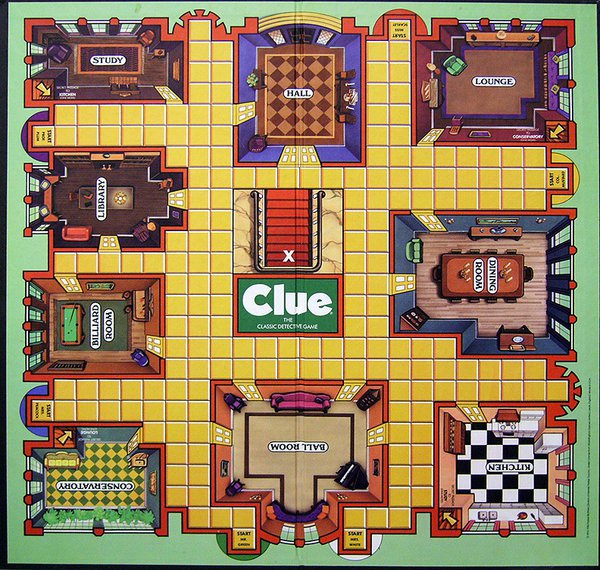
    When my son was little, we played a board game called Clue, Jr. The Jr. version is similar to the classic Clue game, but relies on a simple, straightforward process of elimination to solve a simple mystery. The adult version is best played by controlling for both known and unknown variables, using complex, two-step logic, and putting on a good poker face—there, I’ve just given away my game-winning secrets. 

    When it comes to program evaluation and demonstrating nonprofit impact, small organizations are often asked by funders to play the full version of Clue on a Clue, Jr. budget. Grant makers seeking to determine whether their $5,000 grant was “impactful” ask questions of their grantees that require $100,000 worth of randomized control trials to answer completely. That leads many smaller nonprofits to assume that they simply can’t show impact. The reality is that smaller nonprofits can, and should, be evaluating their programs, but they need to be asking different questions

    Those highest up on the spectrum of scholarly nonprofit research generally seek to establish scientific causality between a given program and its desired outcomes, commonly discussed as “evidence-based practices.” While few funders demand this level of sociological research of their grantees—and even fewer are ready to pay for it—there does seem to be an expectation among many that even small nonprofits should somehow “prove” the direct impact of their programs. 

    In the end, what usually happens is that the nonprofit cobbles together a report based largely on output data, the grant maker files it, and the discussion is over. However, the Standards for Excellence Institute has long held that all nonprofits can and should strive for excellence and impact, regardless of size. Evaluation for smaller nonprofits can be both effective and cost-effective, so long as the evaluation is mission-focused, includes quantitative and qualitative data, includes participant input and determines whether the programs answer a community need. 

    An organization’s program evaluation should start first and foremost with the mission. The Standards for Excellence state that nonprofits 

    “…should have a well-defined mission, and its programs should effectively and efficiently work toward achieving that mission.” 

    It is hard to argue that smaller nonprofits need major funding in order to accomplish this. Your board should review the mission statement annually, with newer board members bringing fresh perspectives on whether or not it is “well-defined.” 

    Your mission statement should be specific enough to know whether or not you are achieving it. The board should review all programs annually to determine if they are mission-focused or not. “Mission creep” is a common threat to the effectiveness and sustainability of an organization, diverting precious resources away from where they should be going. 

    In order to meet the Standards for Excellence, any program evaluation, whether conducted by committed volunteers or a national think tank, should include both quantitative and qualitative data (at the Basics level, data collection should have begun) and include input from program participants. 

    Quantitative data—“the numbers”—help us see the bare bones realities of our programs. Our brains lie to us all the time. It’s called confirmation bias. We tend to see only the facts that confirm our already-established beliefs. However, the numbers can tell us a different story, one that we may not want to hear. For example, if the graduation rate of your financial literacy program is only half that of similar programs, that number will prompt you to find out why, so you can serve your students better. Qualitative data provides context and meaning for your quantitative numbers. If the financial literacy organization in the above example discovered through participant surveys that the timing of the program made it very difficult for single parents to attend classes, a simple change of class time could lead to higher graduation rates. Which, of course, is also better mission fulfillment and better service to people in need. 

    Organization staff should build both qualitative and quantitative data collection into their regular, daily activities. That may mean tracking only how many people come through the door, or it may also mean this:

    • Demographics

    • Achievement, graduation or completion rates

    • Changes in knowledge or confidence

    • Satisfaction ratings

    A cost-effective means of collecting qualitative data and getting participant input is to conduct exit interviews or surveys with your constituents. Make a point to ask constituents frequently for feedback, or schedule feedback collection to occur at program milestones. 

    Regarding the means of data collection, small nonprofits should remember that the more informal the data collection, the more human time it takes to compile the results. If you have a pile of ticket stubs of differing colors from one concert to count and sort, this is not terribly taxing—until you have to do this five times per week. This is where a scanning device to determine what kinds of tickets were used (such as full price, senior, educational, special groups, etc.) might be worth the expense. For organizations with complex services, or for those with state and federal reporting requirements for specific individuals over time, a database is a must. 

    Organizations should regularly evaluate the need for their programs. In my staff reviews of accreditation applications, this is the one area of evaluation that organizations frequently overlook. Waiting lists, sold out concerts, and requests from the public and partner service providers are all valid examples of the evidence of need for your programs. Nonprofits should be careful to define “need” in terms of their constituents, and not in terms of what funders want to pay for. 

    The conversation on nonprofit impact is constantly changing, and some researchers are starting to recognize that nonprofits may operate on a spectrum of best practices that range from “performance measurement” to “evaluation.” Whatever your nonprofit calls it, you can be successful in determining if your programs are meeting your mission, your expectations of quality and the community’s needs. 

    Read Further: 

    As Nonprofit ‘Research’ Proliferates, It Must Be Viewed With Healthy Skepticism 

    Three Kinds of Data that Actually Matter to Nonprofits 

    Tools and Resources for Assessing Social Impact 

    Performance Measurement and Management, from Urban Institute’s Measure 4 Change

  • Planning Strategically Through Process Thinking

    Planning Strategically Through Process Thinking

    nonprofit_consultant
    The following post was written by Standards for Excellence Licensed Consultant Arshad Merchant and is part of our “Ten Years of Advancing Excellence” blog series, celebrating ten years of the Standards for Excellence Licensed Consultant program. Arshad Merchant recently founded Boost Social Sector Consulting to help nonprofit and other socially-minded ventures address critical challenges and pursue greater good. Drawing on 20 years in consulting, Arshad brings substantial experience in strategy, program improvement and organizational development. Arshad Merchant became a Standards for Excellence Licensed Consultant in 2015. Applications for the 2016 Licensed Consultant Training program will be accepted through July 1. 
    T

    his post, originally titled “A Simple Method to Improve College Graduation Rates,” first appeared in the Stanford Social Innovation Review in September 2014. 

    David Borgal and Greg Johnson faced a challenge. Their Boston-area organization, Bottom Line, helped low-income, first-generation students get into college and graduate. Dave as founder and director of operations, and Greg as executive director saw hundreds of students entering college each year with help from Bottom Line. But not enough of them were graduating. And while the six-year graduation rate of Bottom Line’s participants at 73 percent was well above the national norm of 57 percent (based on data from the National Center for Educational Statistics), Dave and Greg firmly believed the rate could be higher. With this thought in mind, Dave and Greg asked Wellspring Consulting to help Bottom Line increase the graduation rates of its students. 

    As we began our investigation, we learned about Bottom Line’s Counselors, who were spending time with 475 college students across 15 campuses, meeting one-on-one or with small groups to provide encouragement and guidance. Bottom Line considered this approach to be a core tool for achieving successful graduation rates. However, the approach used by the Counselors was haphazard, drawing primarily upon their own experience and intuition to determine how to support students. Bottom Line had no systematic understanding of how Counselors should spend their time to yield the highest graduation rates.
    T

    o attack the problem, we employed an approach called Process Thinking, a powerful way to determine how daily activities can be performed to maximize the ultimate goals of a nonprofit organization. Based on the methods of Process Thinking, we began by understanding the needs of the beneficiary of Bottom Line’s services—in this case, the needs of the students. By systematically interviewing the Bottom Line staff who worked directly with students, we uncovered the four most important areas where students needed help to graduate. These were:

    1. Staying on track to graduate—which meant selecting a suitable major, understanding what requirements they must fulfill to graduate, and using strategies and support to improve their academic performance

    2. Building their employability—through securing part-time jobs, writing a resume, and defining a desired career path

    3. Maintaining sufficient financial aid—by renewing their scholarships, staying current on scholarship payments, and making smart financial decisions

    4. Managing life—by staying connected with people who cared, maintaining a positive attitude, and resolving problems that might challenge their ability to graduate

    Next, we assessed how Bottom Line counselors were spending their time. We found that the majority of counselors’ hours were spent meeting with students who were well-organized and motivated. On the other hand, at-risk students often missed meetings and were reticent to engage with Bottom Line’s counselors. Counselors with the best of intentions would too often overlook the students most in need. And without a method to prioritize their time, they weren’t focusing on those who needed them most. 

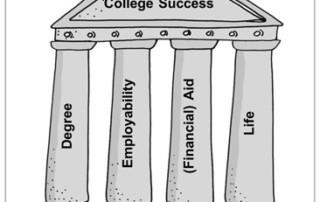
    To address this problem, we started by creating a simple mnemonic for the four dimensions of graduation success, which we called DEAL, where each letter stood for the following:DEAL

    • Degree (academic performance, on track to graduate)

    • Employability

    • (access to financial) Aid

    • Life (emotional support)

    Next, we worked with Bottom Line to create indicators for each of these four dimensions of graduation success. Students would be ranked on these indicators, using a color-coded scale where green meant “on track to graduate,” yellow meant “facing some difficulty,” and red meant “at significant risk of not graduating.”

     At the beginning of school, all students started green—presumed to be on track to graduate—and the counselor’s goal was to keep them green. As the school year progressed, counselors and other staff would regularly update student rankings in a database and tracking system that produced a scorecard for each student. Counselors then used these scorecards to determine how and with whom they should spend their time. As a result of this simple approach, Bottom Line’s counselors were finally able to focus on the students who needed the most help to graduate. 

    DEAL also helped Bottom Line identify areas where extra support was needed beyond what counselors could provide. One such area was in helping students prepare for careers after college. As a result, Bottom Line instituted a new career program. As Dave Borgal said, “DEAL highlighted that employability upon graduation mattered, which caused us to design a program to accomplish that.” 

    Because DEAL is a simple yet powerful way to align the organization around its central goals, Bottom Line uses DEAL as a key part of its formal training program for counselors. And, DEAL has been instrumental in fundraising. Mike Wasserman, Bottom Line’s former director of development who now leads the Massachusetts offices, said, “Before DEAL, we would say, ‘We help students get through college,’ and ‘We do a lot.’ Now we can show the rubric, a sample intervention, and the toolkits. Our stakeholders can more easily understand the range, scope, and nature of services we provide students.”

    With the implementation of DEAL, predicted graduation rates of Bottom Line’s students have risen to 85 percent. Process Thinking, when executed well, enables nonprofits to focus their daily activities where results will be the greatest, accelerate fulfillment of their goals, and ultimately increase their value to society.

  • The Big 4:  Transform Fund Development with Exceptional Donor Care

    The Big 4: Transform Fund Development with Exceptional Donor Care

    nonprofit_consultant

    The following post was written by Standards for Excellence Licensed Consultant Carmen C. Marshall and is part of our “Ten Years of Advancing Excellence” blog series, celebrating ten years of the Standards for Excellence Licensed Consultant program. Carmen specializes in performance improvement, ideation and execution, communications, marketing, organizational development, training and executive coaching. As a management consultant, Carmen has helped numerous leaders, executives, and organizations grow and improve impacting their bottom line, raise additional funds and create new programs that move the organization’s vision forward. Carmen C. Marshall became a Standards for Excellence Licensed Consultant in 2013. 

    Applications for the 2016 Licensed Consultant Training program will be accepted through July 1.  

    There’s good news and challenging news. The good news is that philanthropic giving to nonprofits is up. According to the Urban Institute Center on Nonprofits and Philanthropy, “in 2014, total private giving from individuals, foundations, and businesses totaled $358.38 billion, an increase of just over 5 percent from 2013 after adjusting for inflation. According to Giving USA (2015), total charitable giving rose for the fifth consecutive year in 2014. After adjusting for inflation, this is the first year to exceed the previous peak set before the recession in 2007 ($355.16 billion in 2014 dollars)”. – The Nonprofit Sector in Brief 2015 Public Charities, Giving, and Volunteering 

    The challenging news is that in 2015, the nonprofit donor retention rate average was 46% according to the 2016 Fundraising Effectiveness Survey Report.* In dollar to dollar terms, that means, over 54 percent of donors don’t return to give in the next year. This is not about simply counting the number of donors, however, but it is about being intentional around donor retention and investment of fund development resources. 

    What’s more valuable to your organization A) a fundraising event that generates a profit? B) a large one-time donation? or C) a committed donor who gives annually? 

    While a case can certainly be made for A and B, research indicates that there is no substitute for a committed nonprofit donor who believes in your organization. That donor is most likely to give year after year. Whether you’re the fund development officer or the accidental fundraiser in your organization, let’s face it, getting and keeping donors is preeminent and key to sustainability. Generating revenue to move your organization’s mission forward is paramount and inextricably tied to donor retention. There are four keys that will transform your fund development. These four keys are founded on the premise that it’s not all about you. Put these principles to work and they will not only transform your fund development, but will help you to retain donors. The Big 4 Keys to Transformation: Communicate, Cultivate, Educate and Evaluate. 

    Communicate

    • Results and Impact – Nonprofit donors want to know that their money is at work doing what you promised them. They want to know that their investment is making an impact. Your value to the donor is not only what a great charity you are, but how valuable their contribution is and what a difference it is making in the world. They need to believe in who you are and what you do. Show evidence. Your story must stand out. Communicate results and impact through your organization’s newsletters, e-news, on your website, in eblasts, Facebook posts, Twitter, Instagram, thank you letters and personal notes and occasional phone calls. One of my clients, made it a point to call selected donors and visit others in their region to hand-deliver a photo album of kids and their personal thank you notes as a way of saying thank you. That donor was so touched that she continued to give and increased her giving over the years. If there are really big news items, do an official public relations campaign, to get it on national and local news outlets.

    • Arrange for donors to meet the recipients. Create small and private donor receptions, with a personal touch, to say thank you to donors. One client used such opportunities to connect donors and scholarship recipients.

    • Remember as you communicate, you’re also cultivating.

    Cultivate

    • Be smart and strategic about how, when, the frequency and with whom you make contact. Where possible, make face to face contact.

    • Research your donors; know your market, know your donors.

    • Tell a compelling story.

    • Don’t over solicit. One of the greatest mistakes of some organizations – and turn-offs – in fundraising is over-solicitation. Nonprofit donors do not want to be bombarded with requests for money.

    • Your Fund Development Plan should include goals, timetable, strategies and assignments.

    • Don’t pin donors to your schedule. Consider staggering your asks, where possible, so that dollars can come in over the year and over multiple years. After speaking with the donors, one of my clients learned that some of her donors could make multi-year contributions and structured requests to them around their giving calendar.

    • Relationship is everything so be creative. Assign someone the task of nonprofit donor relationship management, someone who can focus on caring for your donors; also remember that, in the office, fundraising is everyone’s job – from the receptionist (first line of contact) – all the way to management. Cultivation of donors is ongoing. How you communicate can be the difference between donor retention and donor attrition.

    • Honor the donor’s information and privacy. “Nonprofits should respect the donor’s right to determine how their name and contact information is used, including providing opportunities to remain anonymous, request that the organization curtail repeated mailings or telephone solicitations from in-house lists, and have their names removed from any mailing lists which are sold, rented, or exchanged….”- The Standard’s for Excellence Code of Ethics

    Educate

    • Educate your donors. Teach them something new or provide information about your cause (i.e., drop out rates, societal impact and health risks, etc.)

    • Make it about them; answer their questions, provide useful giveaways such as free ebooks, and white papers;

    • Keep it simple, short and sweet; avoid information overload.

    Evaluate

    • Track your donor retention rate. Compare last year with this year. How many donors do you have? How many gave last year? How many of those same donors gave this year?

    • Understand the value of the retention, not just the number of donors

    • Measure your growth or decline;

    • Find out what they liked or didn’t like; want or need; use nonprofit donor surveys to gain valuable donor feedback

    Strategically implementing the The Big 4 with exceptional nonprofit donor care will transform your fund development and keep donors coming back year after year! 

    * The Fundraising Effectiveness Project is produced by Association of Fundraising Professionals (AFP) and the Center on Nonprofits and Philanthropy at the Urban Institute