Category: Licensed Consultant

  • 2017 Class of Standards for Excellence Licensed Nonprofit Consultants

    2017 Class of Standards for Excellence Licensed Nonprofit Consultants

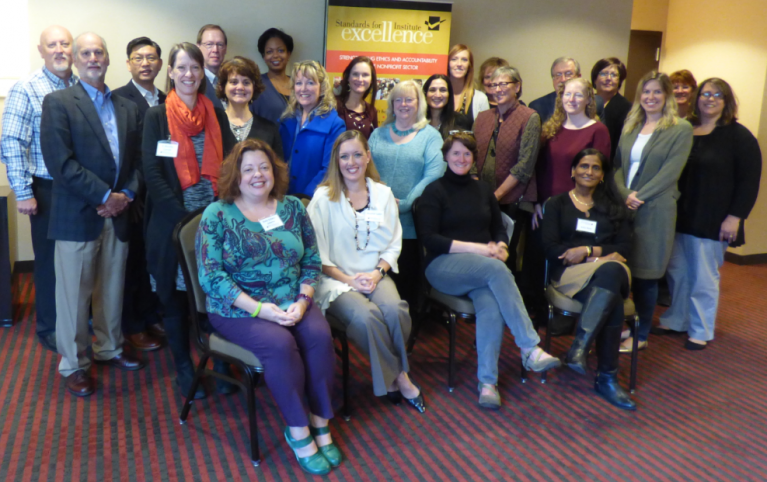
    The Standards for Excellence Institute, an initiative designed to help nonprofit organizations operate more ethically and accountably, announces its 2017 Class of Licensed Consultants. Class members hailing from ten states recently completed the intensive, three-day training seminar and can assist nonprofits nationwide.

    Standards for Excellence Licensed Consultants use their extensive knowledge of the multi-faceted initiative to help nonprofits strengthen their governance practices and exceed the rising demand for nonprofit accountability. They provide nonprofit organizations with organizational assessments, consulting, training, and assistance in the application process for national Standards for Excellence accreditation.

    Cyrus N. White, who traveled from St. Louis, Missouri to participate in the program, offered, “My consulting practice keeps a tight focus on assisting nonprofit boards to govern with greater confidence, skill, and intended results. I rely on the use of evidence-based practices for credibility and impact. Leaving the Standards for Excellence training, I felt confident that these proven practices and resources would enhance my capacity to benefit clients.”

    Kathy Bosin, a new Licensed Consultant from Easton, Maryland said of the training, “The content was both deep and broad, and the three days flew by. I know that I’ll be a much better consultant because of the training. I’m really glad that I invested in this opportunity.”

    “I’m excited to share the program with nonprofits to build their capacity as well as the public trust,” said Jessica Sotelo, who traveled from Blackfoot, Idaho to become a Licensed Consultant. “I believe nonprofits have the opportunity to position their organization for greater fundraising and program success through the Standards for Excellence program.”

    Heather Iliff, President and CEO of the Standards for Excellence Institute, shared that, “We are thrilled to welcome this prestigious group of individuals into our Licensed Consultant fold. Nonprofits around the country can count on these great professionals to help them implement these proven best practices in nonprofit management and governance.”

    The Licensed Consultant Program has grown each year since its inception in 2006. A searchable directory of consultants can be found on the Institute’s website.

    Here are the most recent Licensed Consultants:

    Kathy Bosin, Easton, MD Allison Brody, Williamsburg, VA E. Brooke Carroll, Gaithersburg, MD Asha Clark, Rockville, MD Debbie DiVirgilio, Elkton, MD Shelly Gardeniers, Edgewater, MD Allison Albert Guercio, Baltimore, MD* Barbara Huston, Pasadena, MD Kaaryn Keller, Baltimore, MD Louise Koonce, Wilmington, DE Sung Kwon, Silver Spring, MD Heather Lalor, Annapolis, MD Heather Lamey, Anniston, AL Gerald Meck, Lititz, PA Susan Kate Moss, Memphis, TN* Kathleen Prasser, Hanover, MD Charlotte Rich, Arnold, MD Kim Righi, Galena, MD Kate Scherr-Adams, Baltimore, MD* Jessica Sotelo, Blackfoot, ID Taylor Strange, Washington, DC* Thaddeus Toal, Annapolis, MD Cyrus White, Wildwood, MO Jerry Wright, Oklahoma City, OK*

    *Licensed through a Standards for Excellence Institute Replication Partner.

    The Standards for Excellence Institute will offer the next Licensed Consultant program in the fall of 2018.  For information on the Licensed Consultant program, visit standardsforexcellence.org/become-a-licensed-consultant.

    The Institute, an operating division of Maryland Nonprofits, uses the Standards for Excellence program as its vehicle for effective change. The Standards for Excellence program works to help nonprofit organizations act ethically and accountably in their management and governance, while enhancing the public’s trust in the nonprofit sector.

  • 5 Ways to Make Changes That Stick

    5 Ways to Make Changes That Stick

    As a Standards for Excellence Institute Licensed Consultant, I sometimes see organizations crumble when faced with change. Both internal and external factors force organizations to change their way of operating and fulfilling their missions. When external changes arise, (such as changes in grants, donors, or volunteers) nonprofit organization are left to cope with limited resources. Internally, nonprofit organizations also cope with changes in technology, staff, and funding. These changes are often more traumatic than we expect they will be. Unfortunately, significant changes can bring negative consequences to organizations that are not equipped to deal with transition.
    With Standards for Excellence Institute® resources, nonprofit organizations have measures in place to adapt to significant changes, making them more equipped to function effectively as times change.
    Make sure that your organization is ready to embrace change using these 5 tips:

    1. Make a compelling, supportive argument.

    Staff members are more likely to accept a change when they can see that it is essential to the development and function of the organization. With certain changes, especially those in technology and software, it’s difficult for staff members to grasp the importance of the change. Inspire your staff to embrace the change by showing them that you just can’t function without it!

    The Standards for Excellence® Code identifies specific benchmarks and measures that provide objective standards and best practices on how a nonprofit should operate.  According to the code, “the executive is responsible for the day-to-day management and operations of the organization. The executive should be committed to the mission of the organization and have the skills necessary to manage the paid and volunteer talent, and financial resources of the organization.”

    As an executive director you can combat resistance using data that proves changes are benefiting your organization in program reach and communication effectiveness, and with stories to show the positive impact the change is making in the community you serve. Putting a face to the change will compel staff, volunteers, and community members to embrace it.

    You can show that the change is doing more than benefiting your organization’s internal function. It is helping you to fulfill your mission and serve your community more effectively.

    2. Be a role model.

    In uncertain times, we look to leaders to guide us into the unknown. Establish which key staff members are driving the change, as they will become the leaders that model the transition. If there is a change in technology, those who master the new system first will become a resource for those still catching onto it.
    Ensure that executive directors and board members show interest in the change. If the leaders of the organization do not support the change, no one else will either! You can’t compel your staff to respect something without modeling that respect yourself.

    3. Provide massive support.

    Your staff will likely adjust to the change in a variety of ways. Provide an extensive support system so that your staff doesn’t feel abandoned in the transition. Often, more support is needed than we expect, so plan on providing more support than seems required. Provide helpful resources and emotional support to guide everyone along in the process. Holding the hands of your staff through a difficult process will help everyone to emerge more equipped, comfortable, and confident in the changes that were made.

    Not everyone can admit when they are uncertain or confused with new changes. Allow extra time for adjustment, giving everyone a chance to catch up!

    4. Acknowledge fears and doubts.

    In conjunction with your established support systems, assure your staff that it is OK to feel insecure about unfamiliar territory! Shifting roles, staff rearrangement, and the redistribution of resources may leave employees feeling disconnected to their work, or useless in their new roles. Employees are especially sensitive to shifting roles and changes in staff structure. Unfortunately, colleagues may not readily respond to others’ new roles and power structures.

    To combat these emotional consequences, pay attention to the existing social structure of your organization, and comfort team members when the norm is disrupted.

    5. Plan extensively for the change.

    Break larger goals into smaller, concrete steps. With this approach, when small goals are accomplished, we can celebrate mini-victories along the way! This boosts the mood of everyone involved and sheds a positive light on the transition process.

    Additionally, predict problems before they arise. Issues with technology (problems with new software or a lack of training with new systems) and resistance from your team are very common. By acknowledging that these problems may come up, you can competently attack issues as they arise.

    Finally, create your own definition of “done.” Track your organization’s progress towards the goal by remembering your original vision, resources used, and any milestones accomplished along the way. Then, when your team reaches the end goal, you can look back and feel accomplished about everything that was completed along the journey.
    Then, establish a marker that will signify the official ending of the change. Without a specific ending point to mark the completion of the change, we lose interest and feel as if the goal is not complete. Combat this anxiety and unrest over unmet goals by establishing a finite, terminal end goal. Now, all that is left to do is celebrate the successful transition!

    Rob Levit is a Standards for Excellence® Licensed Consultant.

  • Licensed Consultant Journey: Bunnie Riedel

    Licensed Consultant Journey: Bunnie Riedel

    The Standards for Excellence® Institute continues to build a national network of qualified nonprofit consultants licensed to provide training, consulting, and support on the Standards for Excellence: An Ethics and Accountability Code for the Nonprofit Sector. Standards for Excellence Institute Licensed Consultants come from a broad range of backgrounds and experiences. In anticipation of the upcoming  Licensed Consultant Training, we’re highlighting the journeys of some of our consultants.


    “When I signed up for the Licensed Consultant Training, I was nervous. How many times have I signed up for a seminar only to realize the time and expense wasn’t worth it? I was impressed with the vetting process of applicants for the course, and one of the first things that struck me when the training began was the high caliber of people in the room. The participants and Institute staff were dedicated, serious, and driven. An incredible amount of material is covered during the training; all the materials were top notch and the content was pure quality. At the conclusion, I strongly felt that the experience was worth every hour and penny I spent! Even with my nearly 30 years in nonprofit management, the Licensed Consultant Training was a learning experience. The Standards for Excellence brings together the ideas and notions I have had for many years, organizes them, and presents them in an accessible way. I would have spent years compiling the expanse of material covered in the course! I came away deeply impressed by the body of work that has been developed by the Standards for Excellence Institute. No need to reinvent the wheel – it’s all there! The quality of the materials and how they were delivered was top notch. At the end of the training, I was thrilled to receive a flash drive with all the materials we covered. It’s easy to reference the resources you need. Everything is user friendly, and the materials are frequently updated to reflect cutting-edge best practices. One of the things the Standards for Excellence Institute does well is emphasize service to the community. Our goal is to be servant leaders. It’s important to remind the world that this is what our role really is. The Standards for Excellence code is needed everywhere, and small and large nonprofits alike will benefit from implementing the code and meeting ethics and responsibility standards. Anyone who is passionate about their work in nonprofits, working with nonprofit boards, or serving as a nonprofit leader should look to the Standards for Excellence Institute as an amazing tool. It certainly brings a needed level of professionalism to the nonprofit sector.” -Bunnie Riedel, Standards for Excellence Licensed Consultant


    The Licensed Consultant Training is an exclusive professional development initiative available annually to a limited number of qualified applicants. To participate in this three-day licensing seminar you must successfully complete an application and screening process, including a review of professional experience conducted by Standards for Excellence Institute staff, and be accepted to the program. Learn more here.

  • Licensed Consultant Journey: P.J. Chambers

    Licensed Consultant Journey: P.J. Chambers

    The Standards for Excellence® Institute continues to build a national network of qualified nonprofit consultants licensed to provide training, consulting, and support on the Standards for Excellence: An Ethics and Accountability Code for the Nonprofit Sector. Standards for Excellence Institute Licensed Consultants come from a broad range of backgrounds and experiences. In anticipation of the upcoming Licensed Consultant Training, we’re highlighting the journeys of some of our consultants.

    “I participated in the Standards for Excellence Licensed Consultant Training in October of 2015. My business primarily focuses on helping small businesses and nonprofit organizations with their online marketing efforts. While there is a consulting aspect to what we do, it certainly isn’t focused on the specialized information detailed within the Standards for Excellence materials. Despite that, I have found that being a Standards for Excellence Licensed Consultant has proven to be immensely valuable to my personal and business development. While I am not using the certification to specifically bring on consulting clients for those wishing to obtain Standards certification, it has absolutely helped bring in additional clients to my business. Being able to list that I am a Licensed Consultant on proposals to potential nonprofit clients gives an extra sense of credibility and helps differentiate myself from my competitors who have not gone through the training. Approximately 40% of my business is with nonprofit organizations. While helping them with their online marketing campaigns, I am given glimpses of every aspect of their organization. The materials and training I received from the Standards Program has been an eye opener to say the least – I have been able to pick out potential hazards to nonprofit organizations based on comments in passing that I am able to raise a concerned voice to. I am able to show them the fantastic materials detailing the best practices for each individual Standard that I feel they may be missing, and suggest an expert in that specific area that they should consider contacting to help correct any issues before they become large problems. Each time, the clients have been thankful and impressed that their “web guy” was able to catch these items. I’m looking forward to keeping my certification up to date and continuing to help my clients with the materials.” -P.J. Chambers, Standards for Excellence Licensed Consultant.

    The Licensed Consultant Training is an exclusive professional development initiative available annually to a limited number of qualified applicants. To participate in this three-day licensing seminar you must successfully complete an application and screening process, including a review of professional experience conducted by Standards for Excellence Institute staff, and be accepted to the program. Learn more here.

  • Licensed Consultant Journey: Robin Talbert, J.D.

    Licensed Consultant Journey: Robin Talbert, J.D.

    The Standards for Excellence® Institute continues to build a national network of qualified nonprofit consultants licensed to provide training, consulting, and support on the Standards for Excellence: An Ethics and Accountability Code for the Nonprofit Sector. Standards for Excellence Institute Licensed Consultants come from a broad range of backgrounds and experiences. In anticipation of the upcoming Licensed Consultant Training, we’re highlighting the journeys of some of our consultants.

    My Standards for Excellence license has made me a better consultant, a better volunteer board member, even a better spouse. 

    After a career in-house at a variety of nonprofit organizations, I have spent the last five years consulting. Having worked in a nonprofit think tank after college, a legal services agency after law school, and eventually spending over 20 years at AARP, I thought I knew the sector pretty well. I have always liked variety in my work and moved across departments while at AARP, never staying in one role too long. So eventually, as I began to look for more flexibility and less 9 to 9 stress, consulting seemed worth exploring.  

    I was referred by a colleague to Maryland Nonprofits and applied to the three-day Standards for Excellence Licensed Consultant training in 2011. My goals were to: 

    • Identify and fill in gaps in my knowledge on nonprofit management and governance, 
    • Access tools and resources with which to build a consulting practice, and 
    • Gain confidence to market my experience.  

    And that’s exactly what the training did. Five years later, the Standards for Excellence Codebook and resources are my go-to for the myriad issues nonprofits face. Whether I am helping an organization create a strategic plan, conducting a survey, or strengthening board and staff relations, I have the Institute’s trusted, tested, and thorough materials at my fingertips. In addition, staff are accessible and responsive when I have questions about a particular topic or resource.  

    I keep a supply of Codebooks on-hand and give them out freely to potential clients as well as to friends and colleagues in the sector. I rely on the resources for my own volunteer work with organizations and on boards. And finally, since my husband leads a small national advocacy organization, I regularly give him advice and information from Standards. 

    He gets my discounted hourly rate.  

    -Robin Talbert, J.D., Standards for Excellence Institute Licensed Consultant

    The Licensed Consultant Training is an exclusive professional development initiative available annually to a limited number of qualified applicants. To participate in this three-day licensing seminar you must successfully complete an application and screening process, including a review of professional experience conducted by Standards for Excellence Institute staff, and be accepted to the program. Learn more here.

  • Licensed Consultant Journey: Patricia G. Hanberry, MA

    Licensed Consultant Journey: Patricia G. Hanberry, MA

    The Standards for Excellence® Institute continues to build a national network of qualified nonprofit consultants licensed to provide training, consulting, and support on the Standards for Excellence: An Ethics and Accountability Code for the Nonprofit Sector. Standards for Excellence Institute Licensed Consultants come from a broad range of backgrounds and experiences. In anticipation of the upcoming Licensed Consultant Training, we’re highlighting the journeys of some of our consultants.


    “The Licensed Consultant Training was incredibly valuable. It confirmed and enhanced my knowledge of all things nonprofit. I had been a nonprofit executive for 22 years at the time I participated in the training, so I thought I was pretty knowledgeable! The Licensed Consultant Training confirmed that my existing knowledge was current, and filled in the pieces of information I didn’t have already. Since becoming a Standards for Excellence Licensed Consultant I am certain that I am coaching my clients on widely accepted best practices. I am confident in the knowledge I share with my clients, and know that I am not simply relying on the experiences and training of my own nonprofit career. The materials you gain access to as a Licensed Consultant are just awesome. Absolutely awesome! I adapt the Standards for Excellence Institute training and educational resources and use them with every client in my consulting practice. Having the Institute’s PowerPoints and documents in an easily useable and adaptable format is just priceless. Even after the Licensed Consultant Training and access to the Institute’s materials and resources, I occasionally have questions. The staff at the Standards for Excellence Institute continue to be incredibly helpful. I know they are here to help all along the way.” – Patricia G. Hanberry, MA, Standards for Excellence Institute Licensed Consultant

    The Licensed Consultant Training is an exclusive, professional development initiative available annually to a limited number of qualified applicants. To participate in this three-day licensing seminar you must successfully complete an application and screening process, including a review of professional experience conducted by Standards for Excellence Institute staff, and be accepted to the program. Learn more here.

  • Standards for Excellence Licensed Consultant Program Celebrates “Ten Years of Advancing Excellence”

    Standards for Excellence Licensed Consultant Program Celebrates “Ten Years of Advancing Excellence”

    In May 2016, the Standards for Excellence Institute’s Licensed Nonprofit Consultant program celebrated its tenth anniversary and “Ten Years of Advancing Excellence.” The Standards for Excellence Institute promotes fundamental values in the nonprofit sector such as honesty, integrity, fairness, respect, trust, responsibility, and accountability, all of which are inherently important in the nonprofit world. 

    The Standards for Excellence Institute offers their Licensed Consultant training program to independent nonprofit consultants who apply and are accepted to participate in an exclusive professional development initiative. The training offers the knowledge, skills, and tools necessary to work with nonprofit organizations across the country interested in learning about the Standards for Excellence, implementing the code of excellence, and becoming accredited by the Standards for Excellence Institute. 

    The Institute has been celebrating this milestone with the #10YearsOfExcellence blog series, featuring a series of blog posts authored by Licensed Nonprofit Consultants and highlighting various standards outlined in the Standards for Excellence code. A reception was also held at this year’s Standards for Excellence Licensed Consultant training program featuring a video greeting from Shari Edelstein, the first instructor of the program. P.J. Chambers, a Licensed Consultant from the class of 2015 and owner of WebIXI, gave a presentation on utilizing online technology to promote a consulting business. 

    The Standards for Excellence has been formally adopted by eleven state, regional and national affiliate organizations, and is supported by over 100 Licensed Consultants and over 100 volunteers with professional experience in nonprofit governance and administration. The Standards for Excellence initiative helps nonprofit organizations achieve the highest benchmarks of ethics and accountability in nonprofit governance, management and operations. The program currently has over 200 individual nonprofit organizations that completed a rigorous application and review process to demonstrate adherence to the Institute’s published code of excellence. Licensed Consultants undergo an intensive, three-day training from the Standards for Excellence Institute in how to work with organizations seeking to implement the Standards for Excellence code. 

    The Standards for Excellence Institute will offer the next Licensed Consultant program in the fall of 2017.  For information on the Licensed Consultant program, visit standardsforexcellence.org/become-a-licensed-consultant

    The Institute, an operating division of Maryland Nonprofits, uses the Standards for Excellence program as its vehicle for effective change. The Standards for Excellence program works to help nonprofit organizations act ethically and accountably in their management and governance, while enhancing the public’s trust in the nonprofit sector.  To learn more, visit www.standardsforexcellence.org
  • Nonprofit Board Effectiveness: Making Every Board Better by Modelling and Monitoring a Culture of Integrity

    Nonprofit Board Effectiveness: Making Every Board Better by Modelling and Monitoring a Culture of Integrity

    nonprofit_consultant The following post about nonprofit board effectiveness was written by Standards for Excellence Licensed Consultant Bill Musick and is part of our “Ten Years of Advancing Excellence” blog series, celebrating ten years of the Standards for Excellence Licensed Consultant program. Bill is certified in Healthcare Compliance and Healthcare Privacy Compliance, and certified as a Governance Trainer by BoardSource.  He has presented nationally, and is a contributing author to: YOU and Your Nonprofit Board: Advice and Tips from the Field’s Top Practitioners, Researchers, and Provocateurs (Charity Channel Press, June 2013). Bill Musick became a Standards for Excellence Licensed Consultant in 2007. 

    While Mars Nutrition claims that its M&M’S® “Make Every Occasion Better,” I would say that a key way to Make Every Board Better is to focus on a different set of M&M’s – those that create and sustain a robust culture of integrity. A key goal of the Standards for Excellence Institute is to promote the highest standards of ethics, effectiveness, and accountability in nonprofit organizations.  What better way to express this goal than to create a culture where ethical behavior embodies and reinforces the standards espoused by the Institute.  The board’s role in developing such a culture falls at the intersection of its responsibility to be effective and its duty of obedience to legal norms of both the corporation and to external law.

    Standards for Excellence Guiding Principle II: Leadership, Board, Staff and Volunteers

    Nonprofits enjoy the public’s trust, and therefore must comply with a diverse array of legal and regulatory requirements. Organizations should conduct periodic reviews to address regulatory and fiduciary concerns. One of leadership’s fundamental responsibilities is to ensure that the organization governs and operates in an ethical and legal manner. Fostering exemplary conduct is one of the most effective means of developing internal and external trust as well as preventing misconduct.  Moreover, to honor the trust that the public has given them, nonprofits have an obligation to go beyond legal requirements and embrace the highest ethical practices.

    A Robust Culture of Integrity

    One of the basic tenets of behavioral ethics is that it’s rarely the bad apple, but rather situational factors that lead to lapses in ethical behavior.  So environment matters.  What does a culture look like that reduces the number of risky situations that arise and prepares its staff and managers for those cases where ethical guidance may be gray? Work by the Ethics & Compliance Initiative points to several key traits of organizations with cultures that effectively support ethical practices:

    • Culture that encourages speaking up

    • Employee confidence that peers and supervisors will encourage and support speaking up and taking the ethical path

    • A belief by employees that the organization is fair in its dealings with all stakeholders

    • The formal and informal communication of standards from executive leadership and the board (often referred to as the “Tone at the Top).

    We also know that ethical behavior falls on a continuum from more to less ethical; it’s not usually a case of ethical versus unethical.  The traits listed above help ensure that an organization operates in the upper end of this continuum.

    So what are these magic M&M’s?

    The board’s opportunity to develop and support a robust culture of integrity fall into three major categories:

    • Modelling

    • Monitoring

    • Selection

    (ok, only two of them begin with M, but in the right order, they do spell MM’S)

    Selection

    A board has an important opportunity to create the “tone at the top” by recruiting for integrity when it selects a Chief Executive and new board members.  If you don’t already include questions similar to the following in your recruitment process, then add them:

    • How would you describe a person of integrity?

    • How can a person in a board or chief executive role convey to staff that ethical behavior is a high priority?

    • What would you do if you observed or heard about something that you thought might cross the line of appropriate ethical behavior?

    And don’t stop at recruiting….think about how you can incorporate elements of ethical behavior into your onboarding process, and incorporate indicators of ethical behavior in the board’s assessment of the Chief Executive and in its own self-assessment as well.

    Modelling

    “If each level in an organization’s hierarchy emulates the one above it, then an organization can never be better than its board.” 

    Modelling impeccable ethics is the second way that a board helps to build a robust culture of integrity.  A few ways to model ethical behavior in the board room include:

    • Acknowledge ethics lapses, and look for situational factors that contributed to them, rather than individuals to blame

    • Strive for transparency and fairness, and rate yourself on whether your decisions and the process for making those decisions would be considered “fair” by various stakeholders

    • Set aside a moment on the board’s agenda to identify examples of moral courage within and outside the organization, and celebrate those – especially the internal examples

    • Demonstrate priority of ethics by participating in ethics and compliance training or by the placement of ethics and compliance on agendas, organizational chart and in corporate communications

    Monitoring

    We don’t want to believe that there may be ethical lapses occurring in our organizations, and that denial can lead boards to overlook signs and symptoms.  Boards that take ethics seriously should ensure that some sort of organizational assessment takes place.  It may consist of a regular survey of employees, volunteers and board members that includes the following types of questions:

    • Have you felt pressure to compromise your standards?

    • Have you observed what you perceived as misconduct?

    • If so, did you report the perceived misconduct? If not, what contributed to that decision?

    • Have you observed retaliation for speaking up regarding perceived misconduct?

    In Closing….Be Intentional

    All of the elements described above require a conscious effort by a board.  One way to start the conversation in a board room is to simply ask do we want to be a board that helps to build a robust culture of integrity?  Discuss one of the elements above, or ask the board to rate itself in some of these areas, or review a positive or negative example from the organization’s own experience.  The intention to make a positive contribution towards enhancing a culture of integrity can be the start of an ongoing journey by a board to examine itself and the organization in order to meet the guiding principle that boards should “ensure that the organization governs and operates in an ethical and legal manner.”

  • Back to Basics:  Charity Transparency, Trust, and the Board

    Back to Basics: Charity Transparency, Trust, and the Board

    nonprofit_consultant
    The following post about charity transparency was written by Standards for Excellence Licensed Consultant Carmen Marshall and is part of our “Ten Years of Advancing Excellence” blog series, celebrating ten years of the Standards for Excellence Licensed Consultant program. Carmen specializes in performance improvement, ideation and execution, communications, marketing, organizational development, training and executive coaching. As a management consultant, Carmen has helped numerous leaders, executives, and organizations grow and improve impacting their bottom line, raise additional funds and create new programs that move the organization’s vision forward. Carmen Marshall became a Standards for Excellence Licensed Consultant in 2013. 

    It’s been 10 years since the Standards for Excellence Institute® trained and licensed its first class of consultants to implement the Standards for Excellence®: An Ethics and Accountability Code for the Nonprofit Sector. When the Institute was established, it raised the bar and laid out a road map to achieving excellence for nonprofit organizations who would accept the challenge to strengthen their practices. Now a decade later, 216 nonprofit organizations have received the Standards for Excellence accreditation. In homage to the Institute’s work, it is fitting to revisit the fundamentals of the Code, that if followed, will help an organization achieve its mission with improved effectiveness and efficiency while holding to the highest of standards in nonprofit governance, ethics, and accountability. Back to Basics: Trust, Transparency and the Board is the first installment in the series. 

    Trust is to a nonprofit organization what wind is to an eagle. Without wind it cannot soar. Trust must also be integral to organizational culture lest it function in dysfunction. Consequently, the bedrock of trust building begins and ends with sincere and trustworthy leaders who are mission-driven, motivated and determined to do right by the organization. From there, that example must permeate every board, committee, and department.

    Charity Transparency: Trust-Builders and Trust-Busters

    Trust-Builder: Good communication of good information. It is imperative that information shared with and by leaders can be trusted, is timely and shared appropriately. Board members are able to make better decisions, create appropriate policy and oversight with reliable information. 

    Trust-Buster: Poor communication and bad or inadequate information sets up the board for unnecessary problems, bad decision-making or possible embarrassment. This erodes trust.
    T

    rust-Builder: Strong interpersonal communications. It may seem like a no-brainer, but simple, open and honest respectful interpersonal communication between board members or board and staff can go a long way toward building or sustaining trust. 

    Trust-Buster: Communication that is dishonoring or disrespectful is often at the root of strained relations between board members or board and staff. This not only erodes trust but it slows organizational progress. 

    Trust-Builder: Full engagement. Board members’ heads and hearts must be fully engaged to serve optimally. When board members exercise sound judgment that is always aimed at doing what is right for the organization simply because it’s right, it builds trust. When board members, staff, communities or members served by the organization know that the heart of the board is in the right place, and they are fully present and engaged, it builds trust. 

    Trust-Buster: Board members with high absenteeism, unaware of what’s going on with the organization, or who are perpetually silent do not garner trust. 

    Trust-Builder: Grace for growth based on shared values. Board members may not always agree or see eye-to-eye on every issue, but there are healthy and productive ways to solve problems and disputes, without distracting or detracting from the mission and the work of the organization. Things happen and people make mistakes, so allow for lessons to be learned and for change and correction to occur. Extend a little grace to one another knowing that even you can goof up from time to time. Resolve differences quickly, openly and honestly holding each board member in high esteem. It’s the Golden Rule, folks. Treat others as you would want to be treated. This builds trust. 

    Trust-Buster: Petty arguments and character assassination, even behind the scenes, will always spill onto center stage and distract everyone from the mission, work, and service delivery. This can damage a board, to say nothing of the organization and absolutely destroys trust. 

    Trust-Builder: Charity Transparency and Accountability. It is important to be clear about your role as a fiduciary. You are charged with safeguarding the public’s resources. As a board member, your fiduciary responsibility demands that you remain informed about the affairs of the organization. Should you ever come under scrutiny, “I didn’t know” won’t necessarily hold up, when it was your fiduciary responsibility “to know.” For starters, in every organization, there ought to be separation of duties to maintain transparency. As a board member you should be able to comfortably track and trace information and its sources so that you are comfortable that you are making decisions with the best information available. Transparency and accountability are the power twins of strong governance. 

    Trust-Buster: Refusing as a board member to take responsibility to safeguard the public’s resources either through ignorance, lack of interest or engagement. This erodes trust. 

    Finally, nonprofits in general, make an extraordinary difference serving humanity around the world. The Standards for Excellence Institute remains committed to promoting greater trust between the public and the nonprofit sector. 

    “Nonprofits enjoy the public’s trust, and therefore must comply with a diverse array of legal and regulatory requirements. Organizations should conduct periodic reviews to address regulatory and fiduciary concerns. One of leadership’s fundamental responsibilities is to ensure that the organization governs and operates in an ethical and legal manner. Fostering exemplary conduct is one of the most effective means of developing internal and external trust as well as preventing misconduct. Moreover, to honor the trust that the public has given them, nonprofits have an obligation to go beyond legal requirements and embrace the highest ethical practices. Nonprofit board, staff, and volunteers must act in the best interest of the organization, rather than in furtherance of personal interests or the interests of third parties. A nonprofit should have policies in place, and should routinely and systematically implement those policies, to prevent actual, potential, or perceived conflicts of interest. In this way, ethics and compliance reinforce each other.” Standards for Excellence Code III – Legal Compliance, Guiding Principal.

  • Ask a Simple Question for Nonprofit Impact

    Ask a Simple Question for Nonprofit Impact

    Winning Evaluation Strategies for Smaller Nonprofits

    nonprofit_consultant The following post was written by Standards for Excellence Licensed Consultant Elizabeth Galaida and is part of our “Ten Years of Advancing Excellence” blog series, celebrating ten years of the Standards for Excellence Licensed Consultant program. Elizabeth Galaida is a career nonprofit specialist that offers strategic planning assistance and database renovation. Bringing the necessary depth and breadth of skills sets to bear, she specializes in helping small to mid-sized nonprofits grow and thrive. Elizabeth became a Standards for Excellence Licensed Consultant in 2014.  

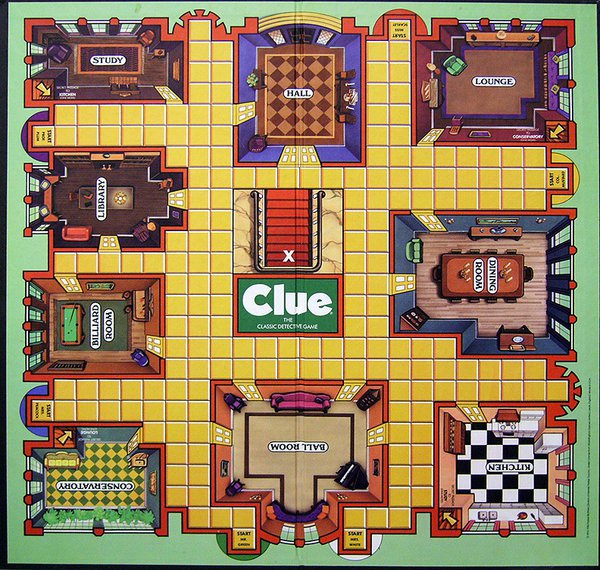
    When my son was little, we played a board game called Clue, Jr. The Jr. version is similar to the classic Clue game, but relies on a simple, straightforward process of elimination to solve a simple mystery. The adult version is best played by controlling for both known and unknown variables, using complex, two-step logic, and putting on a good poker face—there, I’ve just given away my game-winning secrets. 

    When it comes to program evaluation and demonstrating nonprofit impact, small organizations are often asked by funders to play the full version of Clue on a Clue, Jr. budget. Grant makers seeking to determine whether their $5,000 grant was “impactful” ask questions of their grantees that require $100,000 worth of randomized control trials to answer completely. That leads many smaller nonprofits to assume that they simply can’t show impact. The reality is that smaller nonprofits can, and should, be evaluating their programs, but they need to be asking different questions

    Those highest up on the spectrum of scholarly nonprofit research generally seek to establish scientific causality between a given program and its desired outcomes, commonly discussed as “evidence-based practices.” While few funders demand this level of sociological research of their grantees—and even fewer are ready to pay for it—there does seem to be an expectation among many that even small nonprofits should somehow “prove” the direct impact of their programs. 

    In the end, what usually happens is that the nonprofit cobbles together a report based largely on output data, the grant maker files it, and the discussion is over. However, the Standards for Excellence Institute has long held that all nonprofits can and should strive for excellence and impact, regardless of size. Evaluation for smaller nonprofits can be both effective and cost-effective, so long as the evaluation is mission-focused, includes quantitative and qualitative data, includes participant input and determines whether the programs answer a community need. 

    An organization’s program evaluation should start first and foremost with the mission. The Standards for Excellence state that nonprofits 

    “…should have a well-defined mission, and its programs should effectively and efficiently work toward achieving that mission.” 

    It is hard to argue that smaller nonprofits need major funding in order to accomplish this. Your board should review the mission statement annually, with newer board members bringing fresh perspectives on whether or not it is “well-defined.” 

    Your mission statement should be specific enough to know whether or not you are achieving it. The board should review all programs annually to determine if they are mission-focused or not. “Mission creep” is a common threat to the effectiveness and sustainability of an organization, diverting precious resources away from where they should be going. 

    In order to meet the Standards for Excellence, any program evaluation, whether conducted by committed volunteers or a national think tank, should include both quantitative and qualitative data (at the Basics level, data collection should have begun) and include input from program participants. 

    Quantitative data—“the numbers”—help us see the bare bones realities of our programs. Our brains lie to us all the time. It’s called confirmation bias. We tend to see only the facts that confirm our already-established beliefs. However, the numbers can tell us a different story, one that we may not want to hear. For example, if the graduation rate of your financial literacy program is only half that of similar programs, that number will prompt you to find out why, so you can serve your students better. Qualitative data provides context and meaning for your quantitative numbers. If the financial literacy organization in the above example discovered through participant surveys that the timing of the program made it very difficult for single parents to attend classes, a simple change of class time could lead to higher graduation rates. Which, of course, is also better mission fulfillment and better service to people in need. 

    Organization staff should build both qualitative and quantitative data collection into their regular, daily activities. That may mean tracking only how many people come through the door, or it may also mean this:

    • Demographics

    • Achievement, graduation or completion rates

    • Changes in knowledge or confidence

    • Satisfaction ratings

    A cost-effective means of collecting qualitative data and getting participant input is to conduct exit interviews or surveys with your constituents. Make a point to ask constituents frequently for feedback, or schedule feedback collection to occur at program milestones. 

    Regarding the means of data collection, small nonprofits should remember that the more informal the data collection, the more human time it takes to compile the results. If you have a pile of ticket stubs of differing colors from one concert to count and sort, this is not terribly taxing—until you have to do this five times per week. This is where a scanning device to determine what kinds of tickets were used (such as full price, senior, educational, special groups, etc.) might be worth the expense. For organizations with complex services, or for those with state and federal reporting requirements for specific individuals over time, a database is a must. 

    Organizations should regularly evaluate the need for their programs. In my staff reviews of accreditation applications, this is the one area of evaluation that organizations frequently overlook. Waiting lists, sold out concerts, and requests from the public and partner service providers are all valid examples of the evidence of need for your programs. Nonprofits should be careful to define “need” in terms of their constituents, and not in terms of what funders want to pay for. 

    The conversation on nonprofit impact is constantly changing, and some researchers are starting to recognize that nonprofits may operate on a spectrum of best practices that range from “performance measurement” to “evaluation.” Whatever your nonprofit calls it, you can be successful in determining if your programs are meeting your mission, your expectations of quality and the community’s needs. 

    Read Further: 

    As Nonprofit ‘Research’ Proliferates, It Must Be Viewed With Healthy Skepticism 

    Three Kinds of Data that Actually Matter to Nonprofits 

    Tools and Resources for Assessing Social Impact 

    Performance Measurement and Management, from Urban Institute’s Measure 4 Change