Category: Uncategorized

  • Introducing: Standards for Excellence Institute® Licensed Consultants Class of November 2022

    Introducing: Standards for Excellence Institute® Licensed Consultants Class of November 2022


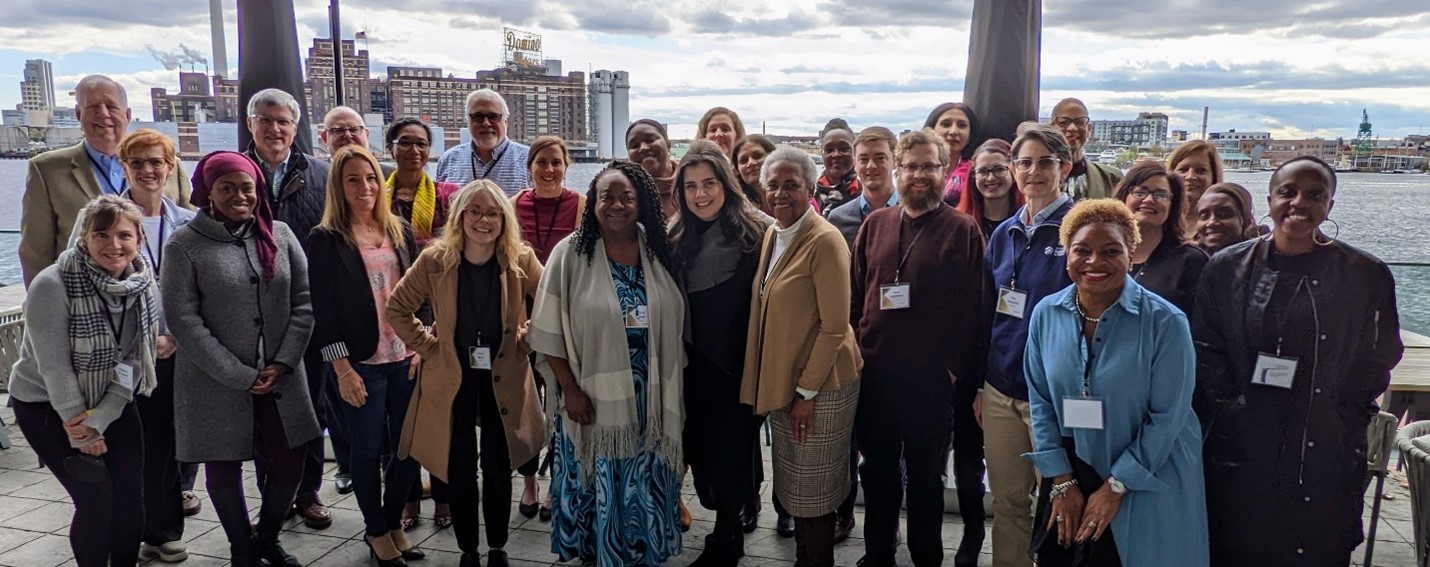
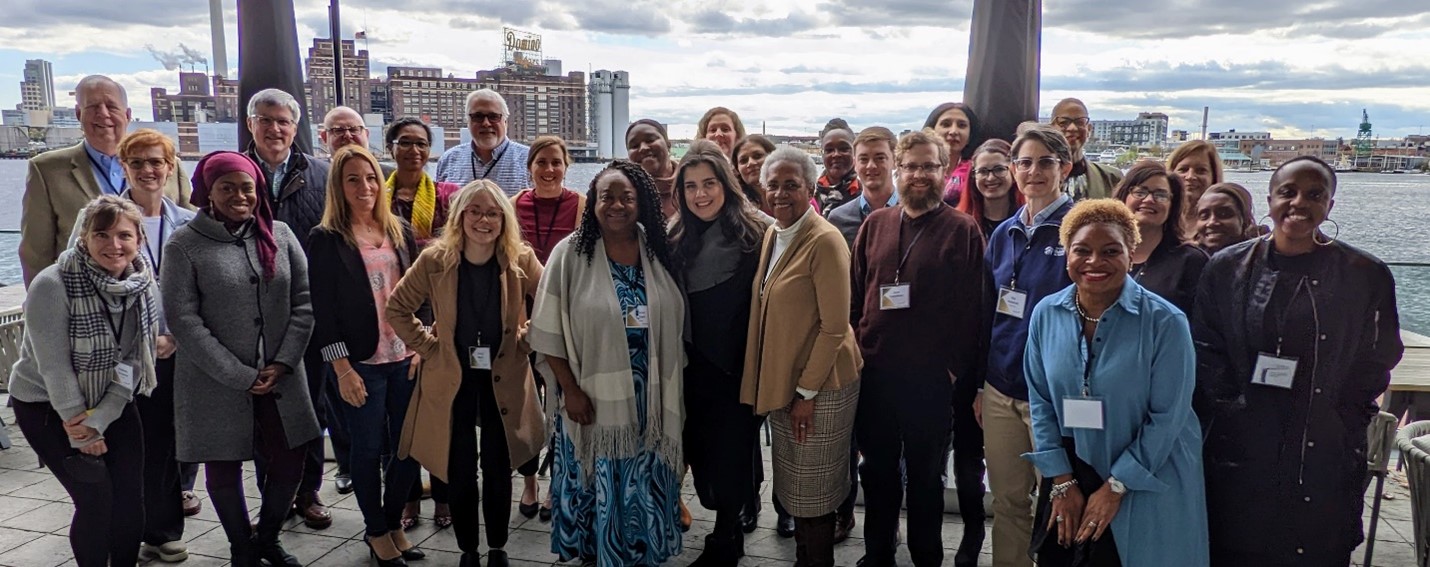
    Standards for Excellence® Licensed Consultant Class of 2022

    Contact: Amy Coates Madsen
    Director, Standards for Excellence Institute®
    acmadsen@standardsforexcellence.org


    Baltimore, MD – December 14, 2022 The Standards for Excellence Institute, an initiative dedicated to promoting the highest standards of nonprofit ethics and accountability, announces its 2022 Class of Licensed Consultants. Thirty professionals completed the intensive, three-day training seminar and are now equipped to assist nonprofits nationwide. The members of the class have more than 525 collective years of nonprofit experience and represent organizations from states across the country, including Delaware, Maryland, Oklahoma, Tennessee, Texas and Virginia.

    Standards for Excellence Licensed Consultants use their extensive knowledge of the Standards for Excellence to help nonprofits strengthen their governance practices and build capacity, accountability, and sustainability in their organizations. Licensed Consultants provide nonprofits with organizational assessments, consulting, and training, and help them earn national Standards for Excellence accreditation.

    Some licensed consultants work with Standards for Excellence replication partners (which are organizations licensed and trained to use the Institute’s program materials and resources to support other nonprofits in a specific geographic area or in a specific mission area).

    The Licensed Consultant Program has continued to grow each year since its inception in 2006. See the complete list of current Licensed Consultants. Anyone interested in becoming a Licensed Consultant should consider applying to participate in the 2023 training — learn more and sign up to be notified when applications are available.  

    Testimonials:

    Beth Anne Dorman, of Saint Michaels, MD, spoke about the training:The Standards of Excellence Training was truly one of the most comprehensive training programs I have ever attended. The incredible group of trainers and speakers shared their expertise, lived experiences and tangible examples that now we as consultants can use in our daily work. As a seasoned leader of a nonprofit, I am continually looking for professional development opportunities that will both challenge me and provide materials that will raise my organization to the next level.  Not only did the Standards of Excellence training provide that, it created a link to professionals across that county that I can lean on when working with my own organization or other organizations in the community.”

    Frances Frost of Silver Spring, MD shared her plans for immediately putting the training to use: “As a Licensed Consultant, I’m excited to provide consulting services to nonprofit organizations, as they work to achieve their mission, be effective in providing service to their community and be efficient in their operation, while embracing diversity and equity within their organization and as they deliver services. I’m especially looking forward to supporting small, community organizations, as they establish themselves and grow. Their impact is so important to the people they serve. And every large organization, started as small one, so their potential is limitless.”

    Noah Spiegel of Noah E. Spiegel Consulting in Nashville, TN speaks of his experience becoming a Licensed Consultant: “Being a Standards of Excellence Licensed Consultant is a professional milestone and honor for me. The other members of the class of 2022 were each exceptional, and the presenters offered so many new ways to think about the ways we can reflect, work, and support our clients. It was also personally affirming to share space with so many dedicated and accomplished leaders all working toward common goals, I’m eager to bring the Standards to Middle Tennessee and share them with our dynamic nonprofit community. The tools the Standards for Excellence Institute has developed are outstanding and will provide my clients and me with opportunities to take our service to the next level. The Standards for Excellence program is expertly designed and executed, and I would encourage nonprofit leaders at any stage in their career to participate.”

    Tiffany Daniel of the CTLDomGroup in Waldorf, MD saysIt was an honor to sit the room with so many scholars and subject matter experts, as we all came together to make our nonprofit organizations stand out amongst the best by learning and incorporating the Standards of Excellence.


    Kym Alexander
    Standpoint Consulting
    Memphis, TN

    Kim Herbstritt
    Winchester, VA

    Colette Newer
    Adventist Community Services North America
    Columbia, MD

    Karen Brown
    Baltimore, MD

    *Tyieshia James
    Center for Nonprofit Advancement
    Washington DC

    Jason Papanikolas
    Anne Arundel Workforce Development Corporation
    Millersville, MD

    *Carly Chafey
    Maryland Nonprofits
    Baltimore, MD

    Mothyna James-Brightful
    MeRise
    Columbia, MD

    Swati Shah
    Maryland Coalition of Families
    Columbia, MD

    Karen W. Cooper
    PHLLC
    Largo, MD

    *Peter Kirchgraber
    Maryland Nonprofits
    Baltimore, MD

    David Sims
    Arundel Community Development Services, Inc.
    Annapolis, MD

    Tiffany Daniel
    CTLDomGroup Inc
    Waldorf, MD

    Elaina Lyons
    Lyons Share Marketing, LLC
    Frederick, MD

    *Earl Sissell
    Delaware Alliance for Nonprofit Advancement
    Wilmington, DE

    Elizabeth “Betsy” Day
    The Community Foundation of Frederick County
    Frederick, MD

    Marla Malone  
    Midwestern State University
    Wichita Falls, TX

    Noah E. Spiegel
    Noah E. Spiegel Consulting
    Nashville, TN

    *Almarie E. Donaldson, Ph.D.
    Maryland Latinos Unidos/Maryland Nonprofits
    Baltimore, MD

    *Jessica Manry, Ph.D.
    Oklahoma Center for Nonprofits
    Oklahoma City, OK 73116

    Kelly Vaughn
    Maryland Department of Housing & Community Development    
    Lanham, MD

    Beth Anne Dorman
    Saint Michaels, MD

    Kashonna Marrow
    Simply Kashonna | Leading Forward
    Ellicott City, MD

    Valencia Warnock King
    The Keighton Group, LLC
    Owings Mills, MD

    Frances Frost
    Silver Spring, MD

    Maria Martins-Evora, MSW
    Independent Consultant
    Odenton, MD

    James Wilson
    SLOFLT Group
    McLean, VA

    Kristine Gallagher Sargsyan
    Primary Care Coalition
    Silver Spring, MD

    Stephanie Narayanan
    Primary Care Coalition
    Silver Spring, MD


    Sunmoluwa Hamilton-Samuel
    HSID Consulting
    Silver Spring, MD


    The Standards for Excellence Institute is an operating division of Maryland Nonprofits that uses the Standards for Excellence program as its foundation. The Standards for Excellence program works to help nonprofit organizations act ethically and accountably in their management and governance, while enhancing the public’s trust in the nonprofit sector.
  • When does our advocacy work on policies or legislation become lobbying that our 501c3 has to report to the Internal Revenue Service?

    Many organizations ask the question “when does our advocacy work on policies or legislation become lobbying that our 501(C)(3) has to report to the IRS?”  

    We think that the difference between “lobbying” and “advocacy” is very important to understand, so that organizations can maximize their impact while staying within the limits on their charitable status.

    ADVOCACY VS. LOBBYING & THE IMPORTANCE OF SECTION 501(H) OF THE INTERNAL REVENUE CODE (IRC)

    Lobbying”, in most situations, such state or local lobbying rules or restrictions, or for 501(C)(3) organizations electing to be governed by Section 501(H) (more below), is a defined term, whose elements typically include communication (a request or call to action), public officials, subject matter, expenditures, and or meals and gifts. 

    Advocacy” is much broader as seen on the slide below, and includes any form of active support for a policy or cause, so that ‘lobbying’ activity can be considered a subset within possible advocacy


    ADVOCACY

    LOBBYING

    Public education

    Normally defined by statute

    Media and Messaging Campaigns

    State and local laws may vary from IRC provisions

    Litigation

    Usual Key Elements: Communication (a request or call to action), subject matter and money

    Organizing Activities

    Protests and Marches

    Lobbying”

    We strongly encourage eligible charitable and other Section 501(C)(3) organizations to affirmatively elect to be governed by rules of Section 501(H) of the Internal Revenue Code.

    Under the basic or “default” provisions in the Internal Revenue Code, a charity is required to report and specifically describe with its annual Form 990 or 990EZ “any activities to influence legislation”, which could include anything under the “Advocacy” heading, even if done by volunteers. 

    BUT if the 501C3 has made the Section 501(H) ‘election’ (by filing IRS Form 5768) it gains two great benefits.  First, ‘lobbying’ is permitted up to a relatively generous amount, and only your expenditures for activities that explicitly meet the definition of lobbying are reported.

    Second, a wide range of impactful ‘advocacy’ activities are excluded from the definition of “lobbying” under the Section 501(H) regulations.  For example, no ‘public education’ or messaging about an issue, even about a piece of legislation, would count as lobbying unless it includes a “call to action”, such as a request for the public to contact legislators to oppose or support specific legislation.  A full-page newspaper ad saying that your organization opposes Bill #523 and explaining its harms or defects would definitely be “advocacy”.   But without what the IRS defines as a “call to action”, it would not be “lobbying” if your organization has made the 501H election. 

    We believe it’s important for groups to take advantage of the Section 501H option.  Read “Worry Free Lobbying” by the Alliance for Justice!

    Henry Bogdan joined Maryland Nonprofits as Director of Public Policy in 1997, after a 20-year career in policy analysis, advocacy, and government relations for the City of Baltimore. Henry is responsible for implementing Maryland Nonprofits’ Public Policy program and assisting organizations with legal or practical questions arising from their own advocacy efforts. Henry’s background in nonprofit tax-exemption issues, his broad knowledge of federal and state laws governing nonprofit organizations (including fundraising regulations), and his familiarity with government processes and the inner workings of state and local legislative bodies make him an ideal speaker and trainer. Henry is a graduate of the University of Baltimore Law School. The Standards for Excellence Institute is a project of Maryland Nonprofits.

  • 52 Tips in 52 Weeks: Charitable Giving

    Good news! Charitable Giving is up in the First Half of 2020 – How will nonprofits respond to welcoming new donors?

    A recent report in the Chronicle of Philanthropy showed that charitable giving was up 7.5 percent in the first half of 2020 over the first half of 2019.  This growth in giving couldn’t have come at a better time in the life cycles of so many nonprofits—grappling to meet growing demands in an all-too challenging environment.  The Chronicle of Philanthropy article describing the report by the Fundraising Effectiveness Project of the Association of Fundraising Professionals stated that those donors who gave less than $250 “were a major driver in growth.”  There was positive news to celebrate in a variety of different gift and donor categories.  In my view, the most exciting finding was that “the … number of … new donors increas[ed] by 12.6 percent.”  That means that many, many nonprofit organizations are finding themselves in the enviable position of being recipients of not only new contributions, but contributions from individuals who haven’t given in the past. What an exciting responsibility for nonprofit leaders. Many in our midst have the chance truly to impress these new contributors with excellent work and stewardship and place themselves in a position to nurture relationships with these donors in the months and years to come.

    How does your organization communicate with and care for its new donors?  Do you have a specific communications strategy for expressing gratitude, getting the donors involved, or sharing the successes of your organization?  Do you work to ensure that new donors are afforded the opportunity to become better acquainted with those parts of your organization’s mission that most reflect their values and priorities?   Do you take intentional steps to treat these new donors in a respectful and ethical manner?   Do you give your donors the chance to give their gifts anonymously or limit how their contact information will be used?  These are just a few of the ways you can pursue best practices in fundraising and working with donors.

    The Standards for Excellence: An Ethics and Accountability Code for the Nonprofit Sector states: “Nonprofits should respect the donor’s right to determine how their name and contact information is used, including providing opportunities to remain anonymous, request that the organization curtail repeated mailings or telephone solicitations from in-house lists, and have their names removed from any mailing lists which are sold, rented, or exchanged.”  As nonprofits work with their donors, especially donors that are new to giving or new to their organizations, they need to pay careful attention to cultivating a culture of careful donor stewardship and respect.  As we enter the fall giving season, I encourage you to reflect on the ways that your organization models exemplary donor practices.  Take some time to determine if your donor engagement and privacy practices can be strengthened and, where appropriate, commit to making improvements.

    For more information on how to ensure donor privacy and respectful treatment of donors, we encourage you to check out the Standards for Excellence educational resource packet, Fundraising, Solicitation, Acceptance of Gifts, and Working with Donors which includes a full description of donor relationships and privacy, donor intent, acceptance of gifts, fundraising by third parties, and also helpful tools like model solicitations and acceptance of gifts policy.

    This educational resource packet and the full series of all packets  – including sample policies, tools, and model procedures to help nonprofits achieve best practices in their governance and management – can be accessed by contacting a licensed Standards for Excellence replication partner, one of the over 150 Standards for Excellence Licensed Consultants, or by becoming a member of the Standards for Excellence Institute.

  • A Conversation with Volunteer Leslie Petak: A Standards For Excellence Peer Reviewer

    A Conversation with Volunteer Leslie Petak: A Standards For Excellence Peer Reviewer


    In celebration of our amazing volunteers at Maryland, we sat down (virtually!) with long time Maryland Nonprofits Standards for Excellence volunteer peer reviewer, Leslie Petak on May 1, 2020.  Thank you, Leslie for sharing your story and for your service to nonprofits throughout the country. 

    How long have you been involved? 
    Leslie began her work as a Standards for Excellence Peer Reviewer in June 2005.

    When did you get involved with SFX what attracted you to SFX?
    Leslie is a trained clinical social worker and supervisor who has worked in myriad settings such as hospitals, community mental health centers, and private practice.  Leslie’s wide-ranging nonprofit experience includes having designed and run programs, and expertise in assessment and evaluation.  
    As a social worker, Leslie is “inclined to be a helper” and wants to give back to the community. Volunteering as a Standard for Excellence peer reviewer was especially appealing to her because she could use her clinical, evaluation, and assessment skills.

    Leslie has been a Standards for Excellence peer reviewer for 15 years. She has enjoyed helping to support many organizations – all types and sizes –  direct service providers, nonprofits focused on the environment and the creative arts  — the gamut, and she appreciates learning more about nonprofits with each review.  
    In your opinion, what is the most important work that this organization does?

    The Standards for Excellence gives organizations a roadmap and template for running their nonprofits. This template provides “an excellent service” since running an organization can be overwhelming “if they want to do it right.”  As a reviewer, you need to keep in mind that each applying organization is desirous of meeting the Standards.  
    Leslie volunteers with other organizations and often recommends the Standards for Excellence program to them –suggesting they use the Standards for Excellence templates on different areas of organizational governance. 

    Why do you volunteer?  What motivates you to stay involved?
    One of the things Leslie enjoys most about volunteering as a peer reviewer is the exposure she gets to an eclectic group of organizations.  She enjoys looking at the organizations’ use of assessments and evaluations which allows her to use her professional skills in these areas. 
    Leslie sees her work as a peer reviewer as giving back and getting back.  Doing reviews of nonprofits for Standards for Excellence enables her to “go under the hood of the organization” and “expand her knowledge” about topics outside her usual areas of expertise such as governance, development, finance, and legal aspects of nonprofit management. As a clinical social worker, she sees her role as a wonderful opportunity to view an organization through the perspective of executive directors, accountants, and lawyers. 
    Additionally, Leslie is impressed with the way the Standards for Excellence Institute has adjusted the accreditation process over the years to support nonprofits such as with the introduction of program tiers, Basics and Basics Enhanced.  The Standards for Excellence team has also shown a willingness to make changes to the program based on their respect for peer reviewer feedback.

    Over the years, the Standards team has asked her at times to help provide feedback on the redesign of Standards for Excellence, which she saw as a “real opportunity and was pleased to be able to join in and provide feedback.”

    Of what contribution or achievement are you most proud?
    Leslie is most proud of “doing the work [the accreditation reviews], and having it provide a meaningful impact on the organizations. Contributing to the improvement of an organization through the review process.”  

    What do you hope the organization will achieve soon? In the long term? 
    Leslie hopes the Standards for Excellence program will continue to do what they are doing – fine-tuning and evaluating an already effective process.
    Now with the pandemic, grant money is disappearing and there may need to be another “branch” to the process/program that takes this into consideration, such as guidance on umbrella organizations, partnerships, mergers, etc.  The program and its approach to organizational governance should be in line with what is happening in the social and economic environment.

    Do you have an anecdote about this cause/organization that really moved you?
    Leslie is “really impressed when people go above and beyond what they are required to do.”  She finds it especially so when small organizations with limited resources accomplish more than larger organizations with more bandwidth. She is also very pleased to give an organization a commendation. 
    What other organizations or causes do you support?
    Leslie also dedicates her time and considerable talent to HoCoAGAST (Advocacy Group Against Slavery and Trafficking) and Howard County Indivisible Immigration Action Team. 

    How has the program or your role changed over the years?
    “There is a great difference between what we do now and when I began in 2005. We were mailed large binders which were often so filled with hundreds of pages of documentation the paper sometimes spilled out of the binders.  We also had three-hour in-person meetings at the old Ostend Street location.  Now the peer reviews are done online, are shorter, and more efficient.”

    Do you have anything else you would like to share?
    I look forward to continuing to serve as a Peer Reviewer.

  • The True Cost of Nonprofit Ethical Failures by Joan Harrington

    Ethical indiscressions can take a major toll on a nonprofit’s stakeholders and cause harm to the entire social sector. Read this article by Joan Harrington of Markkula Center for Applied Ethics, a Replication Partner, to see the impacts of specific ethical failures.

  • Dissent: A Missing Ingredient in Nonprofit Governance by Joan Harrington and Ann Skeet

    Dissenting Board Members often get labeled as problematic, when in reality they are an asset. An open exhange of ideas and thoughts makes for a healthy nonprofit. Read this article by Joan Harrington and Ann Skeet of the Markkula Center for Applied Ethics, a Replication Partner, to encourage an array of diverging outlooks in your organization. 

  • Diverse Discourse in Board Meetings by Anita Varma

    Recruitment is only the first step in effective board diversity. Organizations must then actively facilitate inclusive conditions to allow for open communication in board meetings. Read this article by Anita Varma of Markkula Center for Applied Ethics, a Replication Partner, to learn practices that establish an environment of diverse perspectives. 

  • Can My Nonprofit Pay a Fundraising Consultant a Percentage of What They Bring In?

    Can My Nonprofit Pay a Fundraising Consultant a Percentage of What They Bring In?

    The short answer is, you should not. It is best to work with the consultant on a fixed fee basis for a body of work agreed upon in writing or on an hourly basis with some stipulation on how hours will be approved. The Association of Fundraising Professionals (AFP) Code of Ethical Standards forbids its members from working on a percentage basis because it is seen as a path to impropriety. “Members shall not accept compensation or enter into a contract that is based on a percentage of contributions; nor shall members accept finder’s fees or contingent fees.” The practice of paying fundraisers (consultants, staff, or otherwise) on a percentage basis is also not permitted under the Standards for Excellence: An Ethics and Accountability Code for the Nonprofit Sector which states “Resource development personnel, including both employees and independent consultants, should not be compensated based on a percentage of the amount raised or another commission formula.”  Some reasons why percentage-based compensation is discouraged:

    • The practice puts short-term needs ahead of long-term needs/success/stability of the organization,
    • This practice encourages conflicts of interest,
    • This practice does not take into consideration the professional nature of the fundraising field.

    In some cases, a nonprofit may engage a fundraiser to write a grant or organize a fundraising campaign and, due to factors out of the control of the fundraiser (e.g. the grantmaker changes its priorities unexpectedly, for instance, a tornado hits the area the day of the annual fundraising event is taking place, etc.), the grant may not be successfully funded. The weeks, months, and hours of time the fundraiser invested in the effort should be compensated regardless of these outside factors.

    Want access to resources on fundraising and disclosure requirements? Join the Standards for Excellence Institute. Located in Maryland? Join Maryland Nonprofits for these resources and more!

    From the Standards for Excellence®: An Ethics and Accountability Code for the Nonprofit Sector. The Standards for Excellence code, developed by the Standards for Excellence Institute, includes specific benchmarks and measures that provide a structured approach to building capacity, accountability, and sustainability in your nonprofit organization. The code identifies 6 major areas of nonprofit governance and management: Mission, Strategy, and Evaluation; Leadership: Board, Staff, and Volunteers; Legal Compliance and Ethics; Finance and Operations; Resource Development and Fundraising; and Public Awareness, Engagement and Advocacy.

    The Standards for Excellence® Institute, a program of Maryland Nonprofits, provides the best possible resources to nonprofits nationwide, helping build their capacity to effectively and efficiently meet the needs of their communities. Members of the Standards for Excellence Institute gain access to an online community with an expansive library of resources and customizable templates. The Institute also offers nonprofit accreditation and recognition, a national network of consultants licensed to provide training on the Code, and professional volunteer opportunities.


  • What is the Difference Between a Nonprofit Employee and a Nonprofit Independent Contractor?

    What is the Difference Between a Nonprofit Employee and a Nonprofit Independent Contractor?

    Employee – Black’s Law Dictionary describes an employee as “A person in the service of another under any contract of hire, express or implied, oral or written, where the employer has the power or right to control and direct the employee in the material details of how the work is to be performed.” The IRS has developed a list of factors that indicate whether a worker is an employee. Some of them include:

    • A person is required to comply with another person’s instructions about when, where and how he or she is to work.
    • Training is provided.
    • Integration of the worker’s services into the business operations of the person for whom services are performed.
    • The person for whom the services are performed has the right to hire, supervise and pay assistants.
    • A continuing relationship.
    • The person for whom the services are performed has the right to set hours.
    • Work is performed on the premises of the person for whom the services are performed.
    • The services are performed in an order or sequence set by the person for whom the services are performed.
    • Payment is made by the hour, week or month.
    • The person for whom the services are performed pays business or travel expenses. The person for whom the services are performed furnishes equipment or materials.
    • The person for whom the services are performed has the right to discharge.
    • The worker has the right to terminate his or her relationship with the person for whom the services are performed, at any time and without incurring liability.

    For individuals classified as employees, the employer is required to withhold federal and state income taxes, Social Security and Medicare taxes, and must pay for workers compensation and unemployment. To ensure the organization complies with all necessary withholdings, a payroll service is recommended.

    Independent Contractors

    An independent contractor is a worker who contracts with an employer to provide specialized or requested services on a project or as-needed basis. The IRS defines an independent contractor as someone for whom the employer has the right to control or direct only the result of the work and not the means and methods of accomplishing the result.

    The employer is not required to withhold the independent contractor’s federal and state income taxes and doesn’t have to pay Social Security and Medicare taxes for an independent contractor. Also, the employer doesn’t pay workers’ compensation or make contributions to the state unemployment fund or pay the federal unemployment tax. Independent contractors are paid only for time spent working and are responsible for their own health insurance and retirement plans.

    If an employer incorrectly classifies a worker as an independent contractor, there can be serious legal and tax repercussions. The IRS provides a test that helps to classify whether a worker is an employee or an independent contractor. This test considers three categories of factors:

    • Behavioral: Does the company control or have the right to control what the worker does and how the worker does his or her job?
    • Financial: Are the business aspects of the worker’s job controlled by the payer? (These include how the worker is paid, whether expenses are reimbursed, who provides tools and supplies, etc.)
    • Type of Relationship: Are there written contracts of employee benefits (retirement plan, insurance, vacation pay, etc.)? Will the relationship continue and is the work performed a key aspect of the business?

    There is no set number of factors that “makes” the worker an employee or an independent contractor, and there is no one factor that stands alone in making this determination. It is important to note that the IRS assumes that a worker is an employee. If you are unsure whether to classify a worker as an independent contractor or employee, you can file IRS Form SS-8 to request a determination.

    Want access to resources on budgeting, financial policies, personnel policies, and risk management? Join the Standards for Excellence Institute. Located in Maryland? Join Maryland Nonprofits for these resources and more!

    From the Standards for Excellence®: An Ethics and Accountability Code for the Nonprofit Sector. The Standards for Excellence code, developed by the Standards for Excellence Institute, includes specific benchmarks and measures that provide a structured approach to building capacity, accountability, and sustainability in your nonprofit organization. The code identifies 6 major areas of nonprofit governance and management: Mission, Strategy, and Evaluation; Leadership: Board, Staff, and Volunteers; Legal Compliance and Ethics; Finance and Operations; Resource Development and Fundraising; and Public Awareness, Engagement and Advocacy.

    The Standards for Excellence® Institute, a program of Maryland Nonprofits, provides the best possible resources to nonprofits nationwide, helping build their capacity to effectively and efficiently meet the needs of their communities. Members of the Standards for Excellence Institute gain access to an online community with an expansive library of resources and customizable templates. The Institute also offers nonprofit accreditation and recognition, a national network of consultants licensed to provide training on the Code, and professional volunteer opportunities.